What Is Group Life Insurance? A Simple Guide for Employers
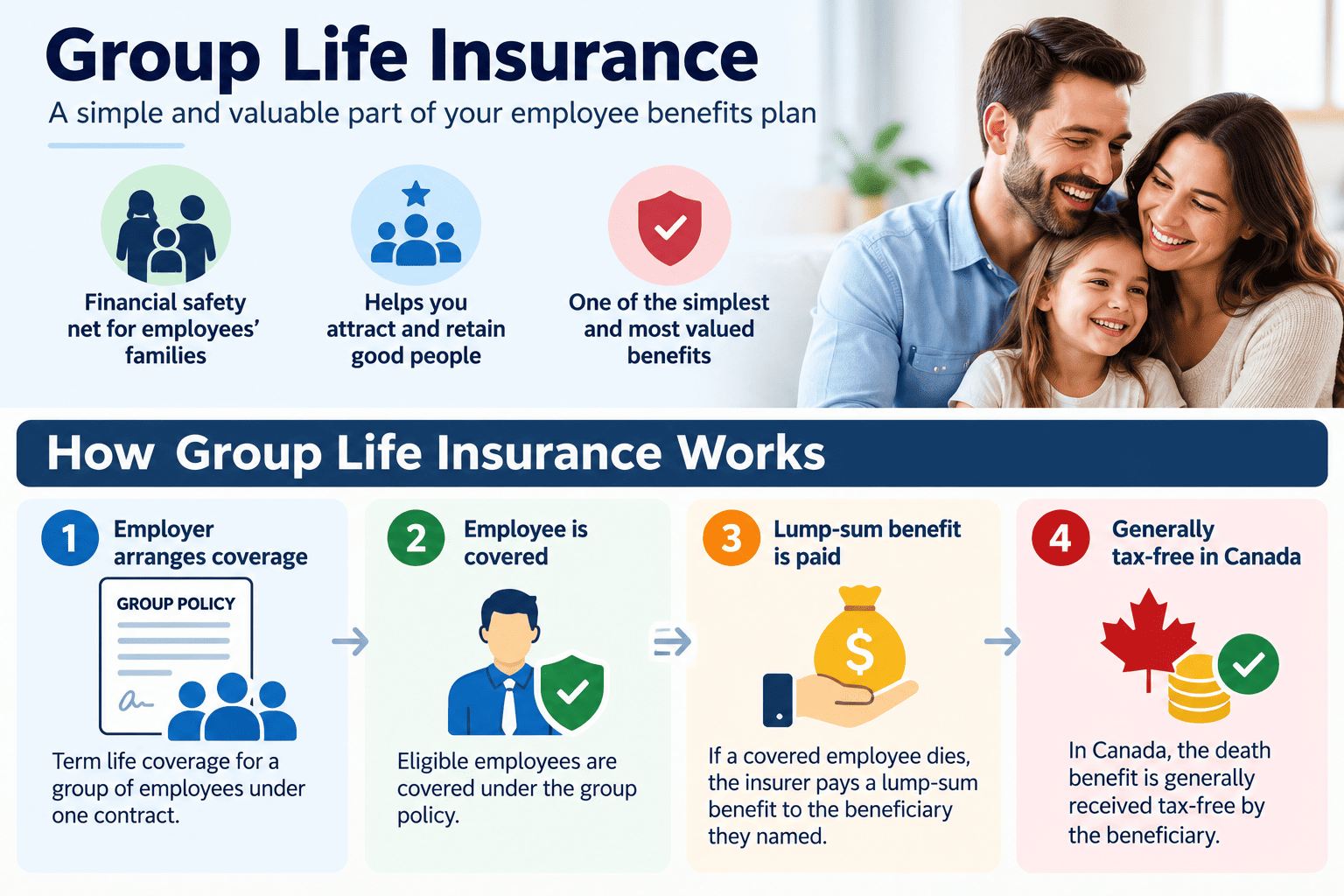
Group life insurance is one of the simplest and most valued parts of
an employee benefits plan. It gives your employees' families a financial safety
net if the unexpected happens, and it helps your business compete for good
people. Here's how it works.
How Group Life Insurance Works
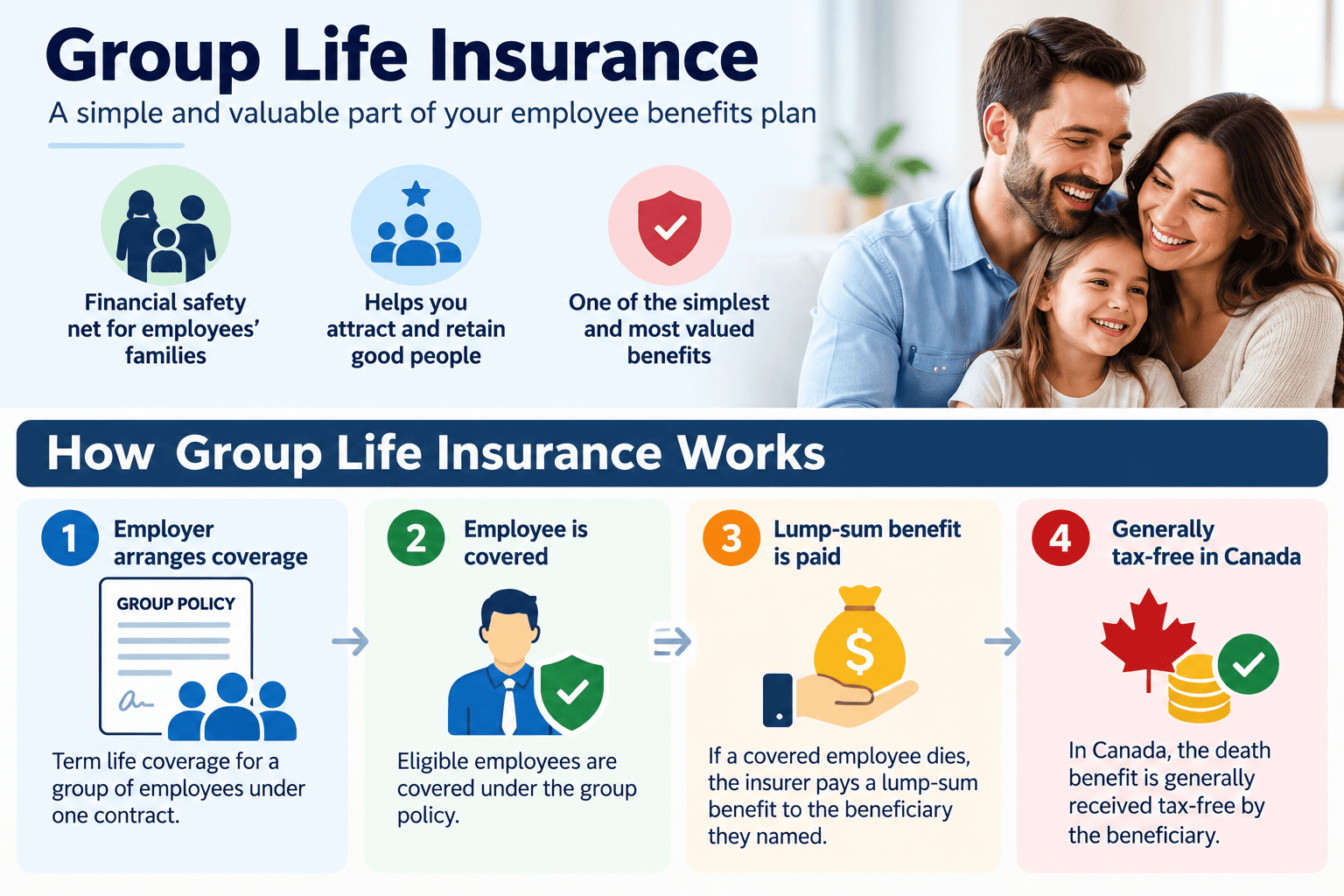
Group life insurance is term life coverage that an employer arranges
for a group of employees under one contract. If a covered employee dies, the
insurer pays a lump-sum benefit to the beneficiary the employee named. In
Canada, that death benefit is generally received tax-free.
Because everyone is covered under one plan, employees usually don't
need to provide medical information for their basic coverage, up to a set
limit. That makes group life especially valuable for employees who might not
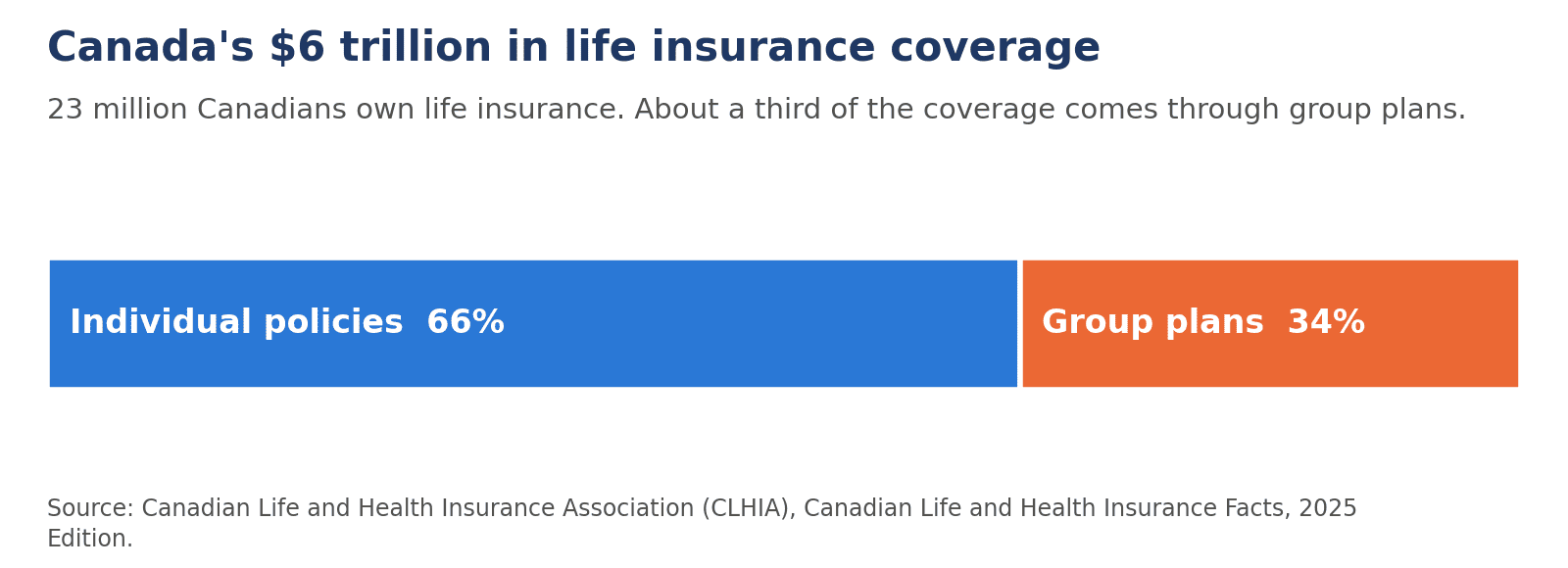
qualify for an individual policy. About a third of the life insurance coverage
Canadians own comes through group plans.
How Much Coverage Do Employees Get?
Coverage is usually set in one of two ways:
•
Flat amount: every employee receives the same benefit, such as $25,000 or
$50,000.
•
Multiple of salary: coverage is tied to earnings, such as one or two times annual
salary.
Every plan has a non-evidence maximum, the most coverage an
employee can receive without providing medical information. Employees whose
coverage would go above that limit may need to answer health questions to get
the full amount. Coverage often reduces at age 65, commonly by 50%, and
typically ends at retirement or age 70.
Common add-ons
•
Accidental death and
dismemberment (AD&D): pays an additional
benefit if an employee dies or suffers a serious injury, such as the loss of a
limb or sight, in an accident.
•
Dependent life: pays a smaller benefit if an employee's spouse or child dies.
•
Optional life: lets employees buy extra coverage for themselves or their spouse,
usually at their own cost.
•
Waiver of premium: many plans keep coverage in place without premiums if an employee
becomes totally disabled.
How is it taxed?
When an employer pays group term life premiums, the premiums are a
taxable benefit for the employee. The value is reported on the employee's T4
slip, so employees pay income tax on the cost of the premium, not on the amount
of coverage. The death benefit is generally paid to the beneficiary tax-free.
What Happens When an Employee Leaves?
Group coverage is tied to employment, so it usually ends when an
employee leaves. Most plans include a conversion privilege, which lets a
departing employee convert some or all of their group coverage to an individual
policy, typically within 31 days and without medical evidence. Maximum amounts
and age limits vary by insurer.
Why It Matters for Small Businesses
For a small business, group life is often one of the more affordable
parts of a benefits plan, and it shows your team that you care about their
families. It also gives employees coverage they might struggle to buy on their
own. It can be combined with health, dental, disability and critical illness
coverage for a complete package.
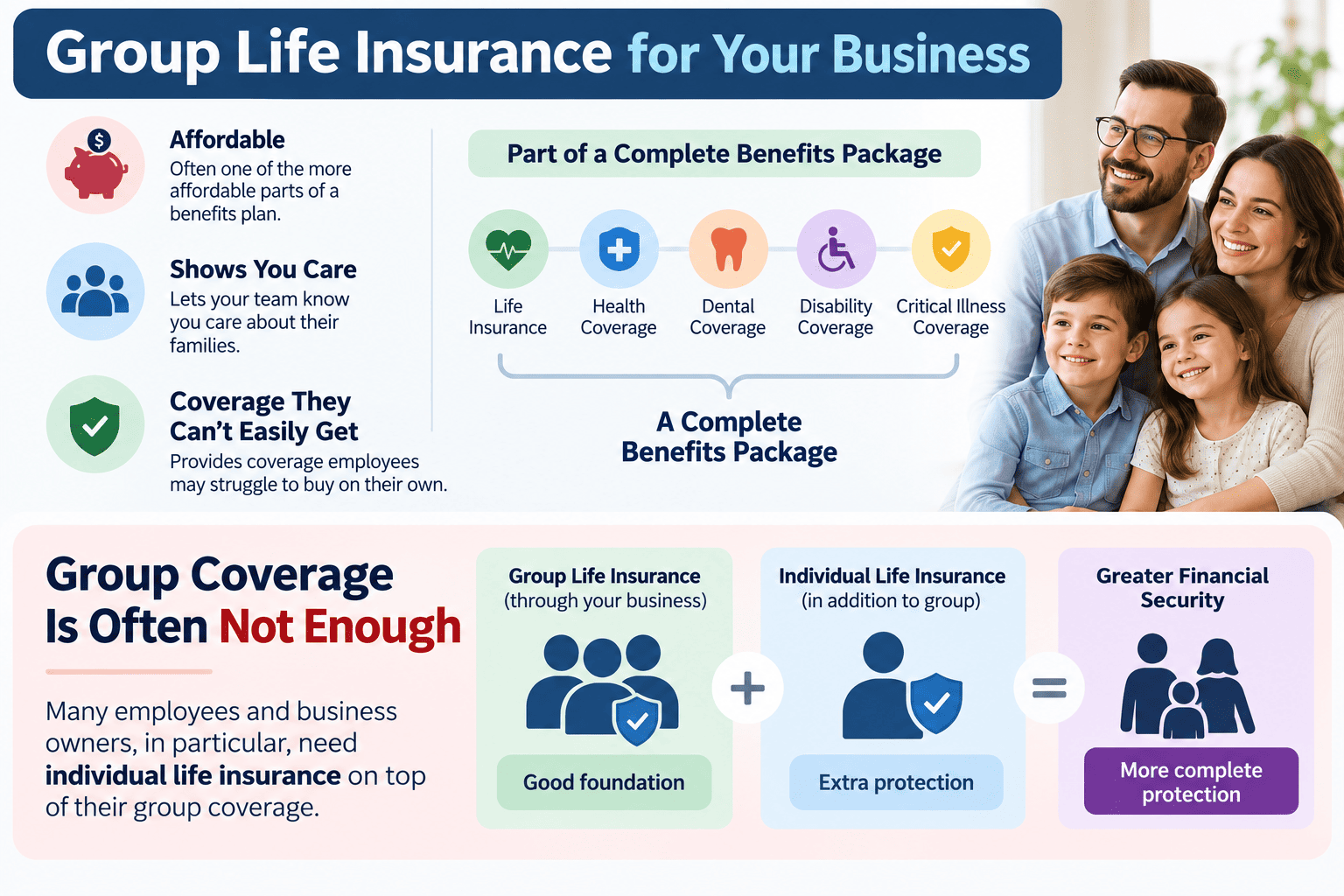
Group coverage is often not enough on its own. Many employees and
business owners in particular, need individual life insurance on top of it.
Learn more about why life insurance belongs in your business plan.
At Wescan Insurance Brokers, we help businesses design group
benefits plans that fit their team and their budget. Contact our
team to talk about adding group life insurance to your plan.
This article is for general information only. It is not legal, tax
or financial advice. Policy terms, eligibility, exclusions and tax treatment
vary. Speak with qualified insurance, legal, accounting and tax professionals
about your situation.
References
1.
Financial Consumer Agency of Canada. Life insurance.
2.
Canadian Life and Health Insurance Association (CLHIA). Canadian Life and Health Insurance Facts, 2025 Edition.
3.
GroupBenefits.ca. Group Life Insurance.
4.
Canada Revenue Agency. Premiums and contributions to
insurance plans.
5.
Canada Life. Group life insurance conversion fact
sheet.