
What is a Health Spending Account (HSA)?
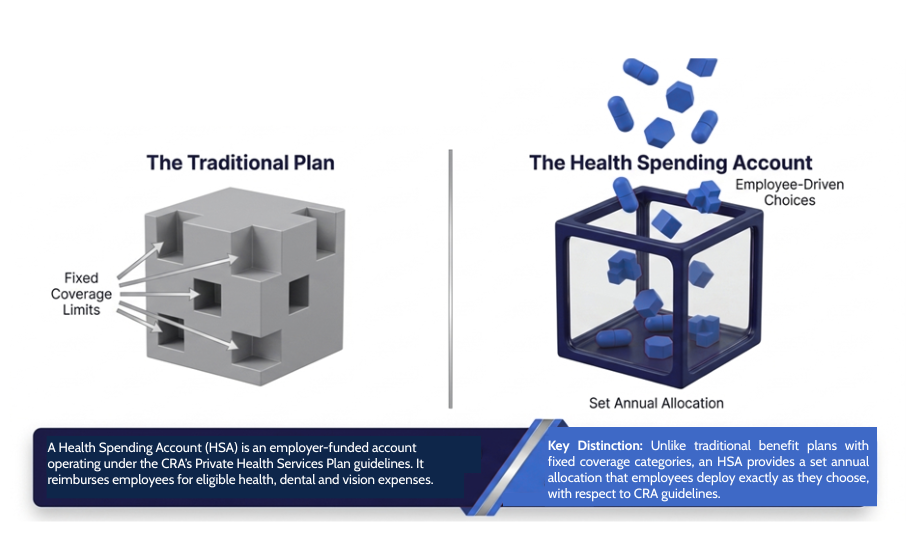
A Health Spending Account1 (HSA) is an employer-funded account that reimburses employees for eligible health, dental, and vision expenses. In Canada, HSAs are typically set up under the Canada Revenue Agency’s (CRA) Private Health Services Plan (PHSP) guidelines and must comply with specific eligibility and claims rules.
Unlike traditional benefit plans with fixed coverage, an HSA gives employees a set annual amount to use as they choose.
How An HSA Works In Practice
Most HSAs1 follow a simple process:
- The employer sets the rules: who is eligible and how much each employee receives each year.
- Employees pay out of pocket for eligible expenses and submit claims (with receipts) to the HSA provider.
- Reimbursement is provided for approved claims, up to the employee’s annual HSA balance, often through direct deposit.
- Unused funds may roll over for up to one year, depending on the plan design.
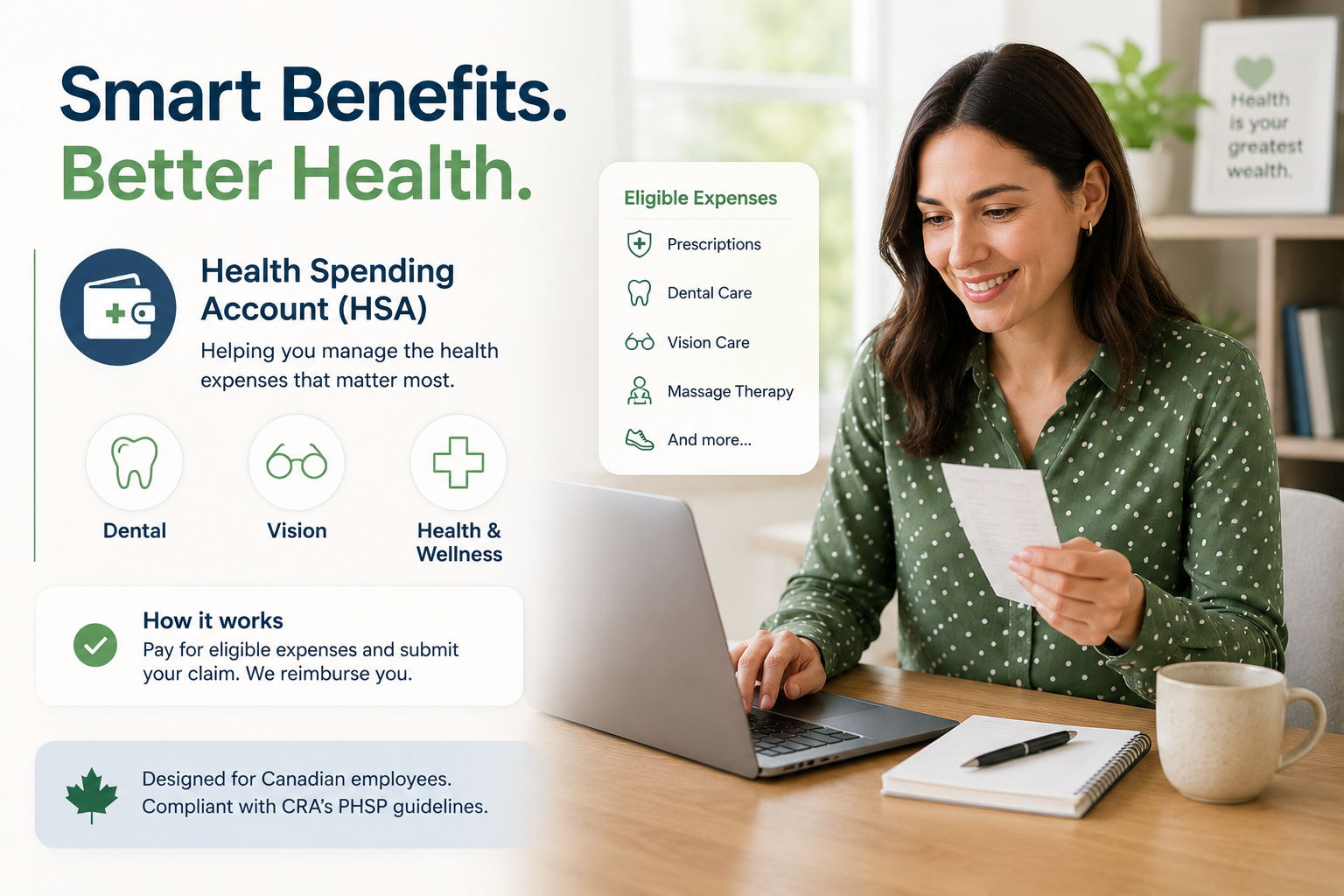
HSAs offer tax advantages for both employers and employees. This is because employers can generally treat contributions as a tax-deductible business expense. Furthermore, employees typically receive reimbursements tax-free, provided the HSA is set up properly under CRA rules. This is particularly beneficial for organizations, as it turns out to be more efficient than providing the same amount as additional salary.
Eligible Expenses: What You Can Claim
Eligible expenses are usually grouped into categories like dental, medical, vision, hospital, durable medical equipment, and professional services.2
Dental expenses
HSAs commonly reimburse both routine and major dental work, including:2
- exams, cleanings, and X-rays
- fillings, root canals, extractions
- dentures, crowns, bridges, implants
- orthodontics
This is especially beneficial for families with significant dental expenses that may exceed standard plan limits.
Medical expenses
Eligible medical claims often include:
- prescription medications dispensed by a licensed pharmacist
- vaccines
- drugs or devices obtained through Health Canada’s Special Access Program
- diagnostic services such as MRIs, ultrasounds, X-rays, and medically required lab tests
Vision Expenses
Vision Claims Often Include:
- prescription eyeglasses and contact lenses
- Laser eye surgery
- services from opticians, optometrists, and ophthalmologists
This is particularly helpful since many traditional plans have limited vision coverage that does not fully cover eyewear costs.
Durable Medical Equipment
Many HSAs cover a wide range of equipment, often when prescribed, such as:
- CPAP machines and supplies
- wheelchairs and mobility scooters
- hospital beds for home use
- braces, orthotics, orthopedic footwear
- hearing aids and diabetic supplies
- certain bathroom and mobility aids
Professional Services
HSAs can also reimburse a broad list of regulated health professionals, such as:
- chiropractors, physiotherapists, massage therapists
- acupuncturists, naturopaths
- psychologists, psychotherapists, social workers
- speech therapists, dietitians, occupational therapists
- various medical specialists
Why Invest In HSAs

When efficiently designed, a Health Spending Account offers a practical balance between employer financial control and meaningful flexibility for employees
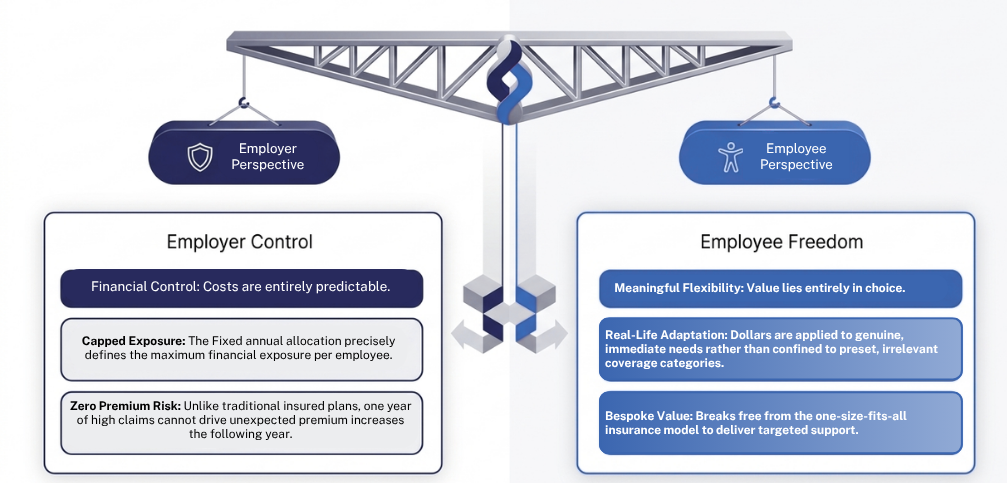
From an employer’s perspective, costs are very predictable. You can set a fixed annual allocation, which defines the maximum exposure for each employee. Moreover, unlike traditional insured plans, there is no risk of unexpected premium increases driven by a few high claims.
For employees, the value lies in choice. Rather than being confined to preset coverage categories, they can apply their HSA dollars to the services they genuinely need. This also benefits employees because it adapts to real-life circumstances.
HSA provides a strategic way to design a benefits program that reflects your unique workplace needs. Moreover, an HSA allows your company to break free of a one-size-fits-all insurance plan and build a solution that delivers value to your employees.
HSA vs. Traditional Health And Dental Plans
An HSA does not usually replace a traditional benefits plan. It often works best as a complement. Many employers maintain a core extended health and dental plan for essential medical services, while adding an HSA for additional flexibility. This allows employees to use extra funds for other out-of-pocket expenses that are important to them.
In some cases, particularly for owner-operators or very small businesses, an HSA can serve as the primary health benefit. The most effective structure depends on the company’s size, workforce needs, and the owner’s approach to cost management and risk.
Is an HSA Right For Your Business?
For many Canadian employers, the key question is not whether to offer an HSA, but how to integrate it into the overall benefits strategy.
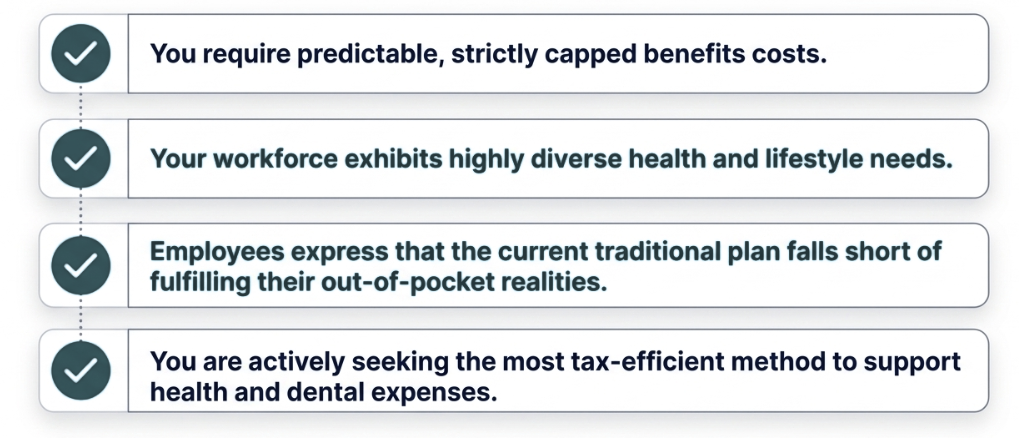
HSAs are especially appealing if:
If you have any further questions about Health Spending Accounts, please don’t hesitate to contact us.
Citation:
1. Canada Revenue Agency (CRA): https://www.canada.ca/en/revenue-agency/services/tax/businesses/topics/payroll/benefits-allowances/medical-expenses.html2. HSA Expense Items: https://wescaninsurance.ca/uploads/files/hsa-myhsa-eligible-expenses-cra-1779213835.pdf