
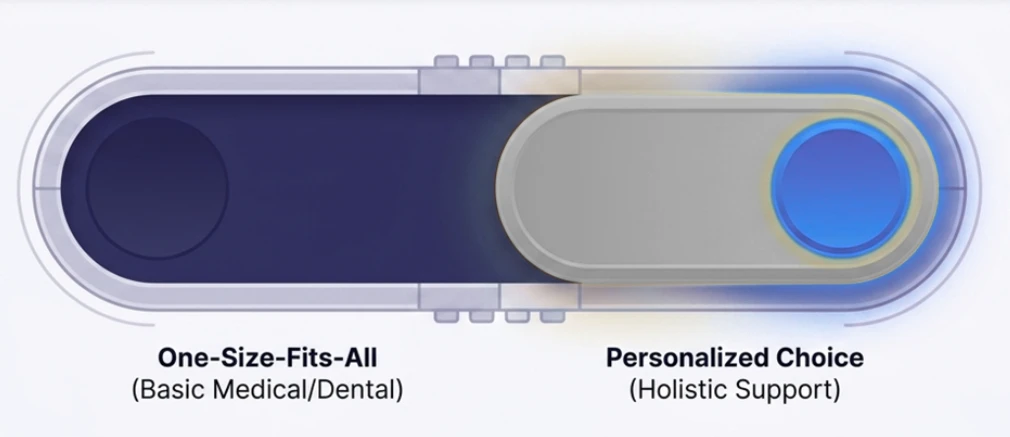
Think of a WSA as a wellness allowance. Employers fund it, employees choose how to use it, and the result is a benefit that feels personal rather than one-size-fits-all. It often sits alongside traditional group benefits, giving employees more choice over what "wellness" means to them.
What is a Wellness Spending Account?
A WSA is an employer-funded account for wellness and lifestyle expenses not typically covered by standard health or dental plans. Eligible expenses may include fitness, mental wellness tools, ergonomic equipment, or personal development.
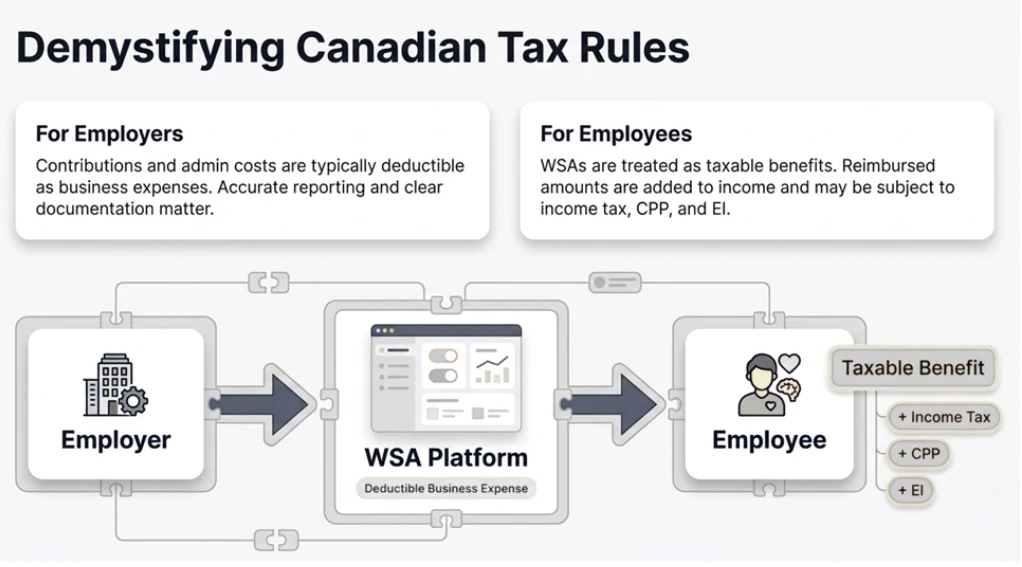
The big distinction in Canada is how WSAs are treated for tax purposes. WSAs are usually treated as taxable benefits. In other words, when an employee is reimbursed through a WSA, that amount is typically added to their income and reported.
This approach provides cost predictability, as the maximum spend is set in advance and contributions are typically deductible as business expenses.
How a WSA works in practice
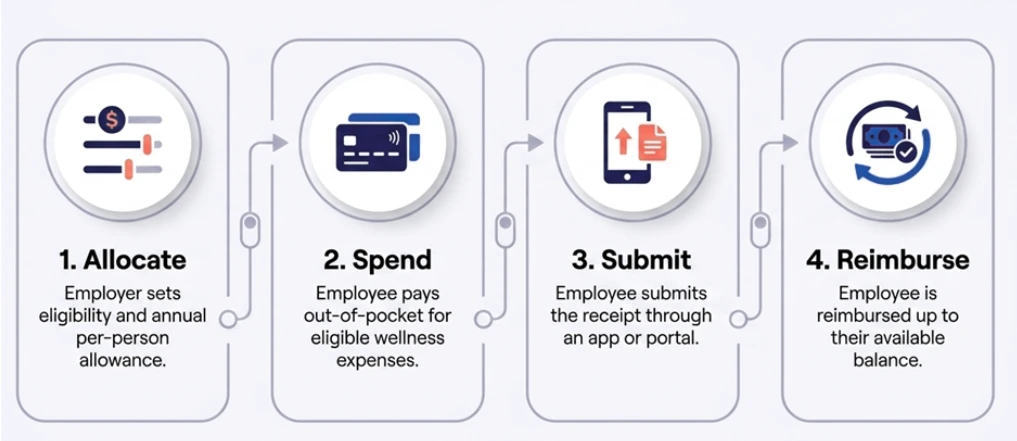
Most WSAs operate similarly: employers determine eligibility, often limited to full-time employees, and set an annual per-person allowance. The allowance usually depends on the budget and benefits strategy. Furthermore, this approach also provides cost predictability, as the maximum spend is set in advance and contributions are typically deductible as business expenses.
Employees pay for eligible expenses, submit receipts through an app or portal, and are reimbursed up to their available balance. This process is straightforward, especially for those familiar with insurance or benefits portals.
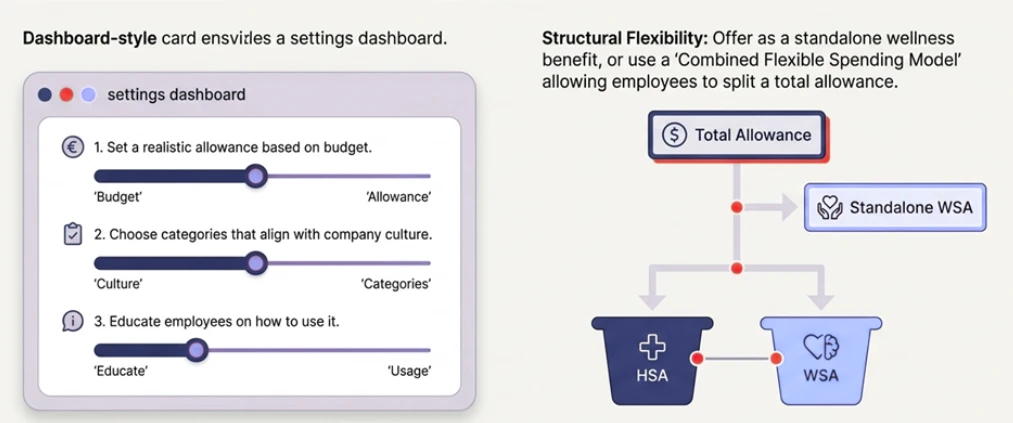
Some organizations take it a step further and offer a combined flexible spending model that allows employees to split a total allowance between a Health Spending Account (non-taxable) and a WSA (taxable). This gives employees the freedom to prioritize medical expenses when needed and lifestyle or preventive wellness when that's the bigger focus.
What can employees use a WSA for?
WSAs stand out because they are not limited to CRA's medical expense list and can cover a broader range of wellness spending, as long as the employer clearly defines eligible categories.
In many workplaces, that means employees can use a WSA for gym memberships or fitness classes, mindfulness or meditation apps, counselling or coaching that isn't covered by their core health plan, or ergonomic equipment like a better chair or a standing desk.
WSAs can also include personal development courses, workshops, or programs that support growth and resilience, because learning and well-being often go hand in hand.
WSA vs. Health Spending Account (HSA): what's the difference?
WSAs and HSAs are often mentioned together, but they serve different purposes.
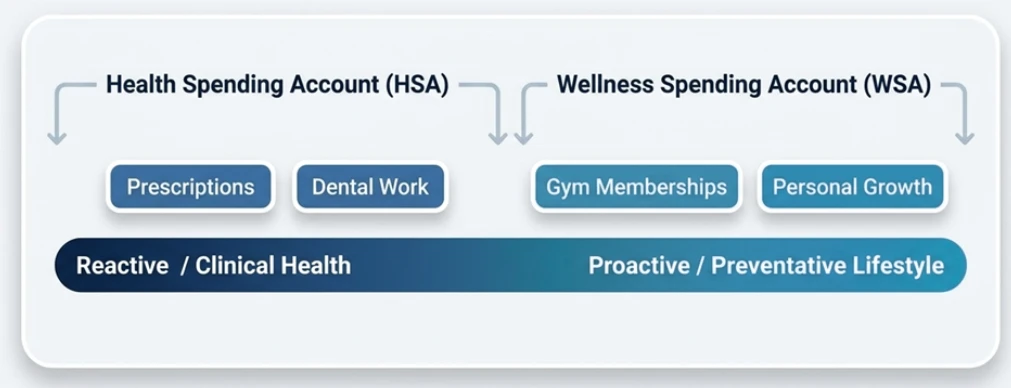
An HSA is intended for medical and dental expenses that fall within CRA guidelines, such as prescriptions, dental work, vision care, and many paramedical services. When HSAs are set up correctly and used for eligible expenses, reimbursements are generally non-taxable to employees, making them especially valuable.
A WSA, on the other hand, is built for broader wellbeing. It's ideal for preventative and lifestyle expenses that improve day-to-day health but don't qualify as medical claims. The trade-off is tax treatment: WSA reimbursements are typically taxable to employees.
Many employers find the combination works best. The HSA protects tax-efficient coverage for medical needs. At the same time, the WSA adds the flexibility employees want, especially those who may not have high medical claims but still value support for fitness, mental wellness, or personal growth.
Why employers are adding WSAs
The appeal of WSAs is that they're modern, flexible, and predictable.
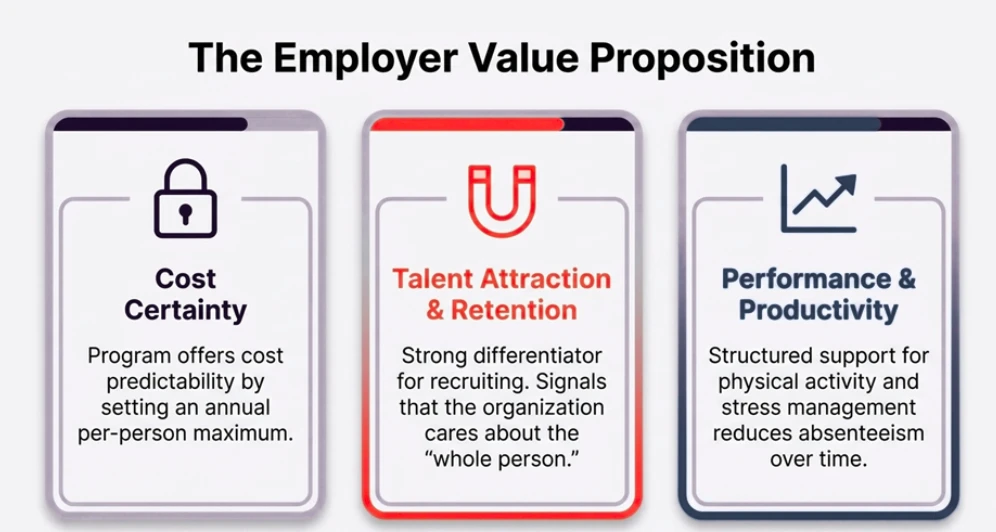
For employers, a WSA turns wellbeing from a 'nice-to-have' into a tangible, structured part of the benefits strategy. When employees have support for physical activity, mental wellness, ergonomics, and stress management, it can reduce absenteeism and improve productivity over time. Just as importantly, offering a WSA signals that the organization cares about the whole person, not only what happens when someone gets sick.
WSAs can also be a strong differentiator in recruiting and retention, particularly for employees who value autonomy and lifestyle-friendly benefits. And because the employer sets the annual maximum, the program offers cost certainty while still delivering high perceived value.
For businesses, WSAs can be an accessible way to strengthen group benefits without taking on the complexity or cost of more traditional coverage.
What employees actually like about WSAs
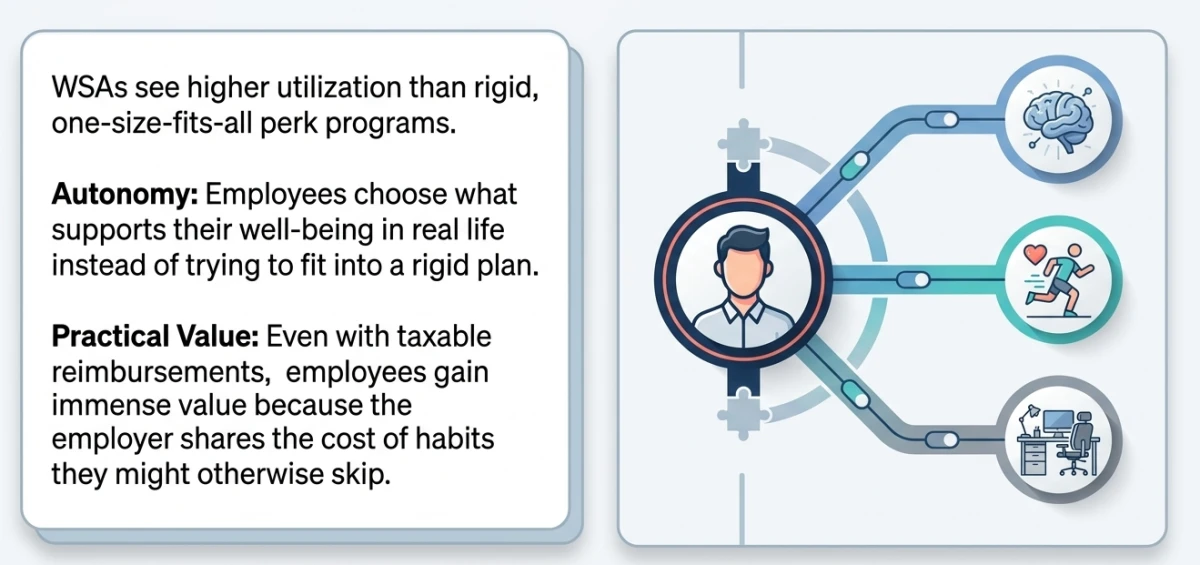
Employees tend to appreciate WSAs because they feel practical. Instead of trying to fit into a rigid plan, they can choose what supports their well-being in real life.
Employees may choose to apply their allowance toward therapy, fitness initiatives, ergonomic enhancements to their home workspace, or courses that support confidence and stress management. That flexibility is by design, and it helps explain why WSAs frequently see higher utilization than more rigid, one-size-fits-all perk programs.
Even though reimbursements are taxable, employees still get value because the employer is sharing the cost of habits and services they might otherwise skip.
A quick note on tax and compliance
Because WSAs are generally treated as taxable benefits under CRA rules, they need to be administered properly. Reimbursements are typically added to the employee's income and may be subject to income tax, CPP, and EI, similar to other taxable allowances.
Employers generally can deduct the contributions and admin costs, but accurate reporting and clear documentation matter.
Designing a WSA that people actually use
The best WSAs aren't the most complicated- they're the clearest. A strong plan starts with setting a realistic allowance, choosing categories that align with your culture, and ensuring employees understand how to use it.
WSAs can also fit into the bigger benefits picture. If you already offer an HSA, a WSA can be a natural add-on that expands flexibility. If you don't, a WSA can still work as a standalone wellness benefit, especially as a starting point for organizations building out their total rewards strategy.
Final thoughts
A Wellness Spending Account is a tool that gives employees real choice while enabling employers to maintain cost control. When layered alongside core benefits and an HSA, it creates a flexible program that supports physical, mental, and lifestyle well being in a way that feels relevant-and actually gets used.
If you have any further questions about Wellness Spending Accounts, please don't hesitate to contact us